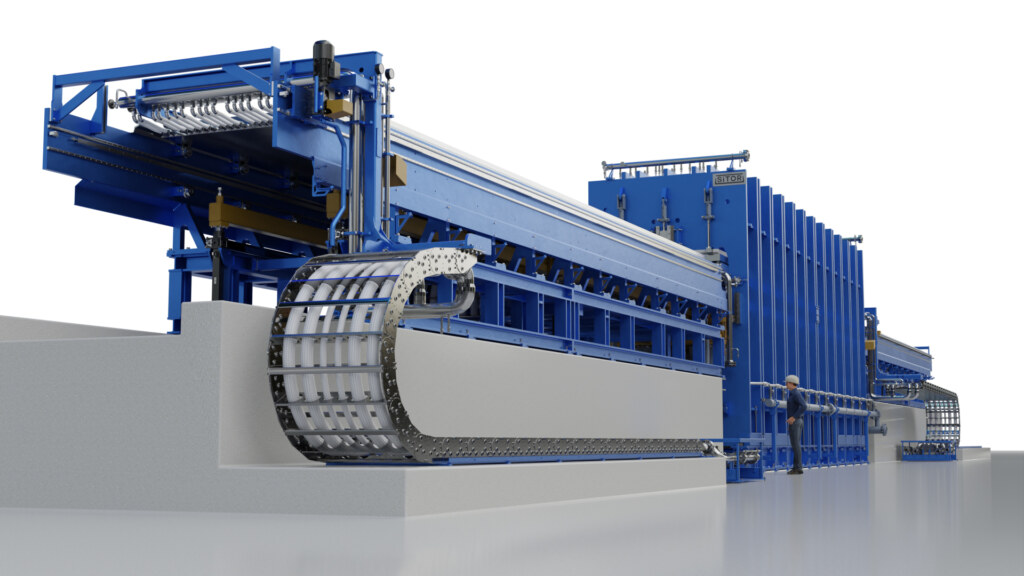
We specialize in the design and production of custom hydraulic presses for plastic sheets, precisely tailored to the specific requirements of each application. Our equipment ensures high precision, reliability, and long service life, delivering optimal results in the forming and processing of plastic materials.
With our many years of knowledge and experience, we produce large hydraulic presses for industrial use. Among our achievements is the largest hydraulic press for plastic sheets ever produced with a format of 12 x 2 meters with an annual capacity of more than 4000 tons.
SiTOR is a world-leading manufacturer of custom hydraulic presses for plastic sheets, with more than 100 large-scale presses successfully built and installed worldwide.
Variety of use
Our presses specialize in plastic materials such as:
PP (polypropylene)
PE (polyethylene)
HDPE (High Density Polyethylenee)
UHMWPE (Ultra-High Molecular Polyethylene)
They are intended for the production of sheets/panels from various plastic materials, with a high-pressure and temperature pressing process.
We are the first and only manufacturer of presses in which we install welded moulds. These moulds are distinguished by lower power consumption, high rigidity, long service life and easy maintenance.
Process automation
To simplify work and manage the press more efficiently, we offer different levels of process automation.
Our solutions enable:
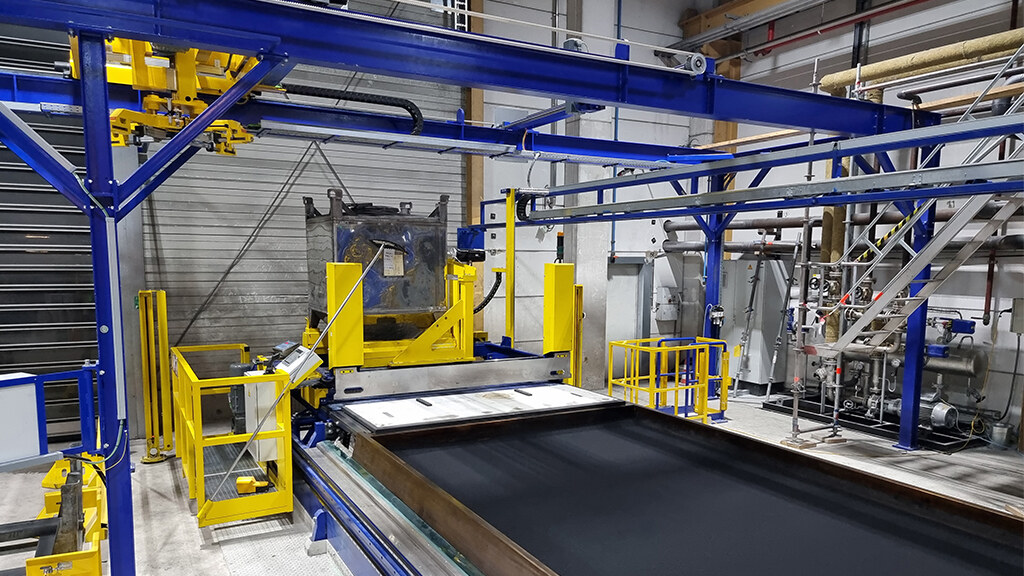
Automated filling and levelling of material in tools
Automatic application of release agent
Automatic serving of additional devices on the press
To achieve the best flatness and uniform thickness for most plastic materials, we can make a press with ONE or TWO openings.
In the two-open version, the capacity of the press is double that of a single-open press.
Special hydraulic systems are installed on the press, which enable very precise levelling during pressing, even for materials with higher MFI (melt flow index) such as LDPE and PP.
For materials with a lower MFI, such as UHMWPE, it is also possible to produce versions with multiple openings.
A one-open press allows the production of one sheet per cycle. Press tool consists of a piston and one or two moulds.
ONE-OPEN PRESS / one mould
The press design with one mould and one transport device is suitable for the production of thicker sheets, where pressing cycles are very long and emptying the mould does not contribute significantly to decreasing the press capacity.
ONE-OPEN PRESS / two moulds
The design with two moulds and two transport devices is suitable for the production of thinner sheets, where pressing cycles are shorter, and the time spent on filling and emptying the mould represents a large part of the production cycle.
While one sheet is being pressed in the press, the mould outside the press is prepared for the next cycle, which shortens the preparation time for the next cycle, and increases the productivity of the process.
TWO-OPEN PRESSES
A two-open press allows the production of two sheets per cycle, which doubles the capacity. Press tool consists of a piston and middle piston, and two or four moulds. Just as with one-open press, the choice of the number of moulds depends on the cycle length, the desired increase in capacity, and the available space.
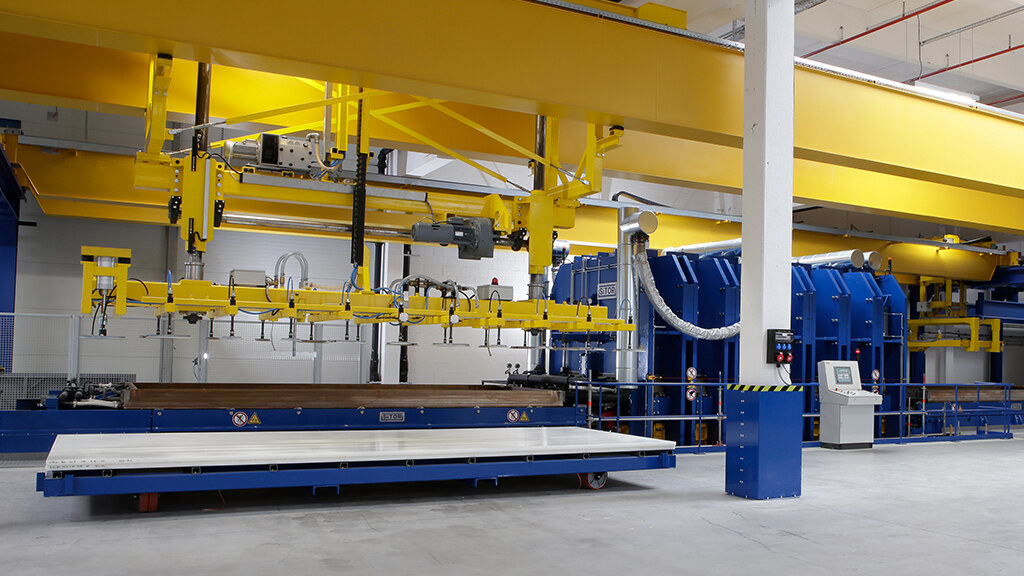
Depending on the number of moulds, the press can have one or two transport devices, which drive the moulds filled with raw material into the press and then with finished products out of the press. The moulds are always prepared for cycle at the height of the upper level. The lower mould is lifted to the working height by means of a lifting mechanism installed on the transport device.
TWO-OPEN PRESS / two moulds and one transport device
TWO-OPEN PRESS / two moulds and two transport devices
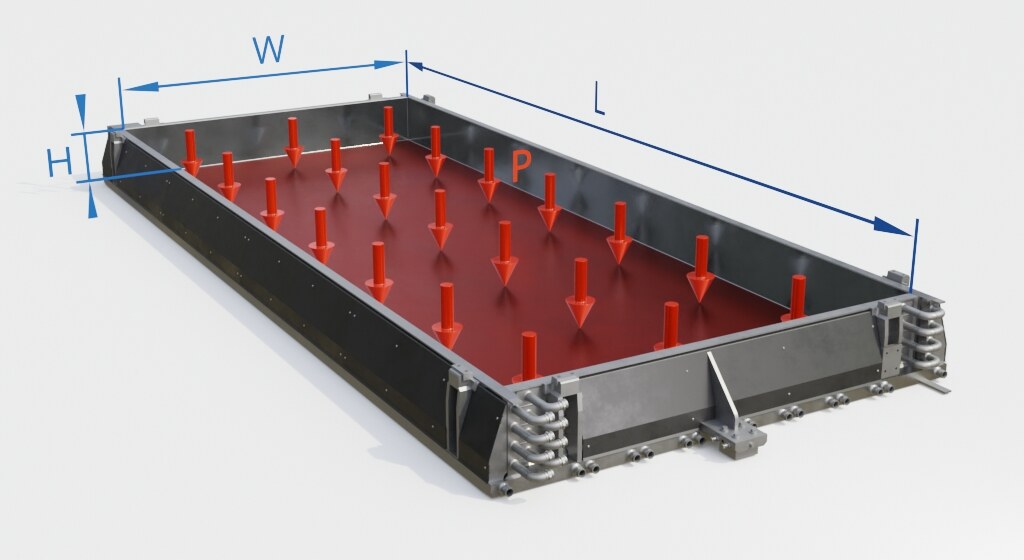
Maximum internal dimensions of the mould, maximum specific pressure on the working surface and maximum temperature:
Length (L)
13.000 mm
Width (W)
2.600 mm
Mould frame height (H)
400 mm
Specific pressure (P)
1.200 N/cm2
Temperature
420 °C
Compression production cycle
The production cycle consists of 6 steps.
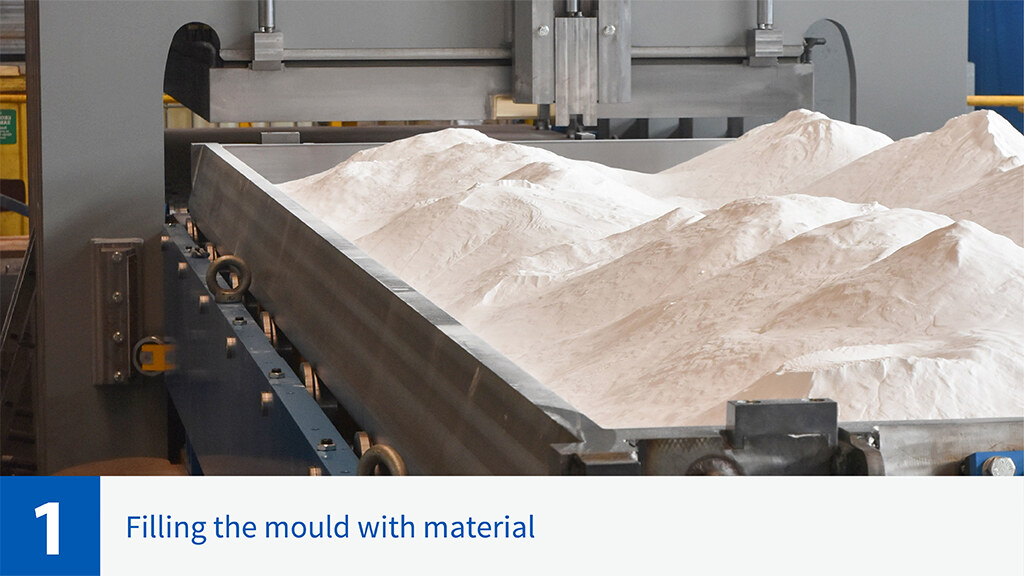
Before starting, the working surface of the tool is cleaned, on which a release agent is then applied. The raw material in the form of powder or grains is poured into the mould and levelled.
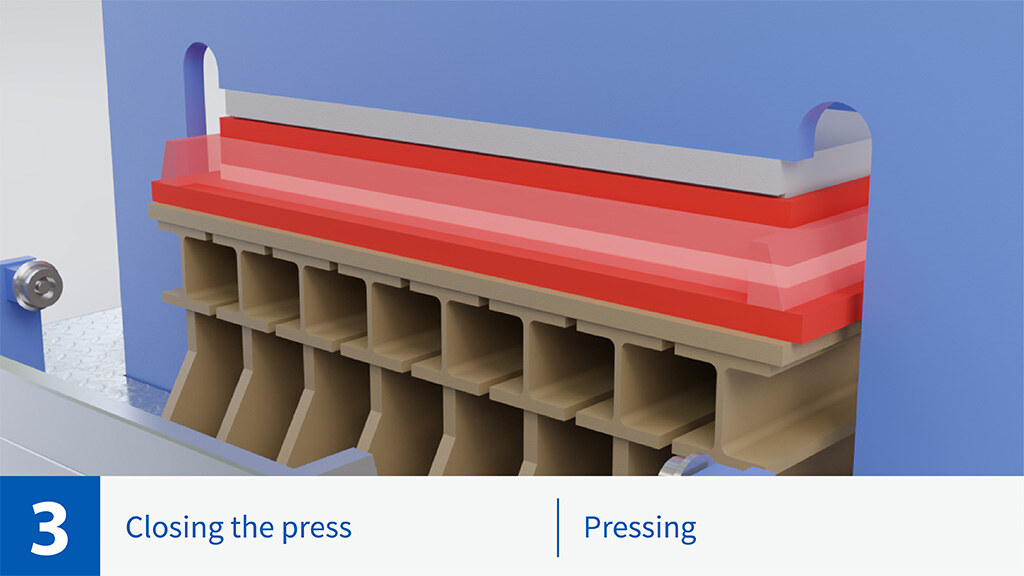
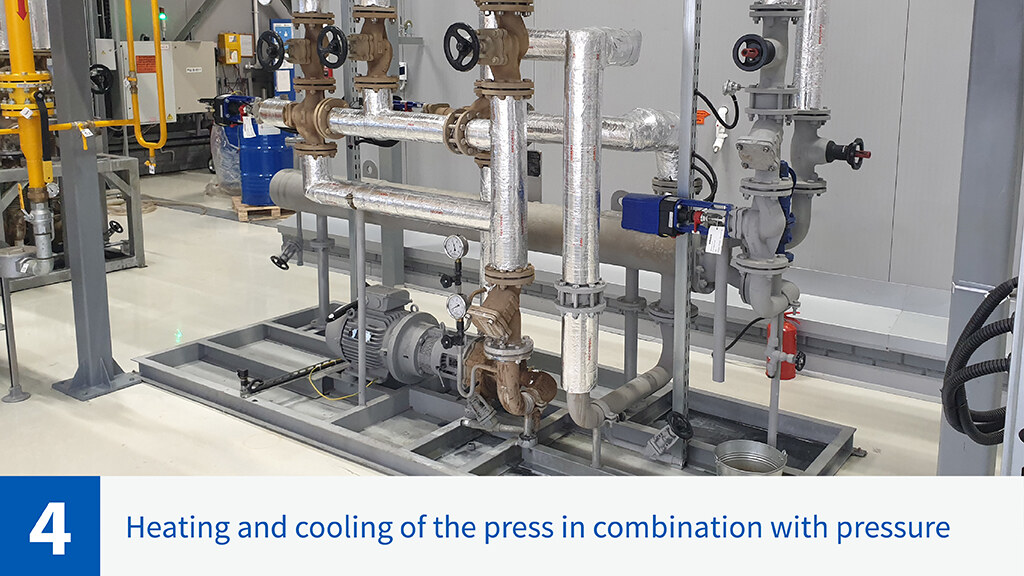
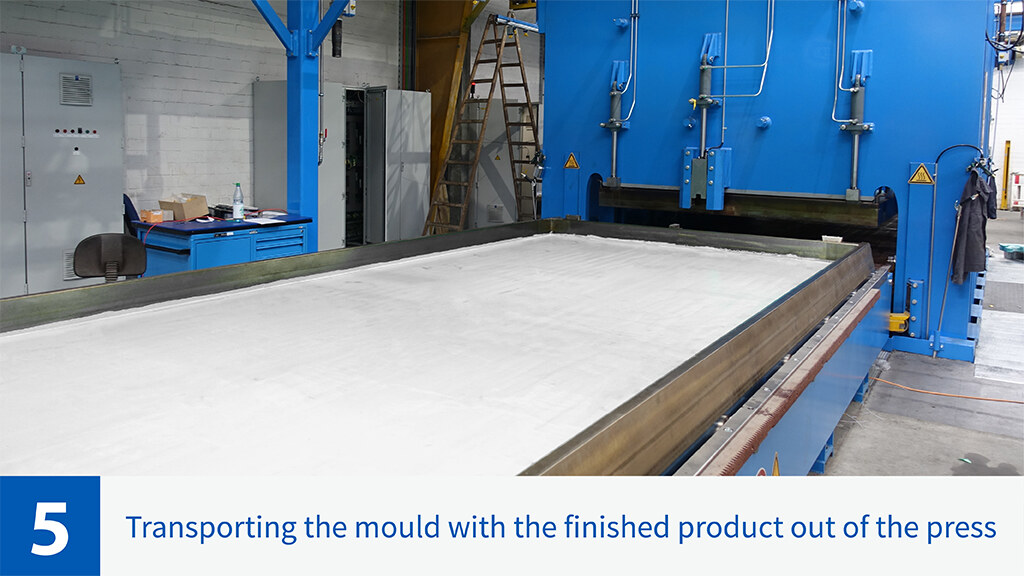
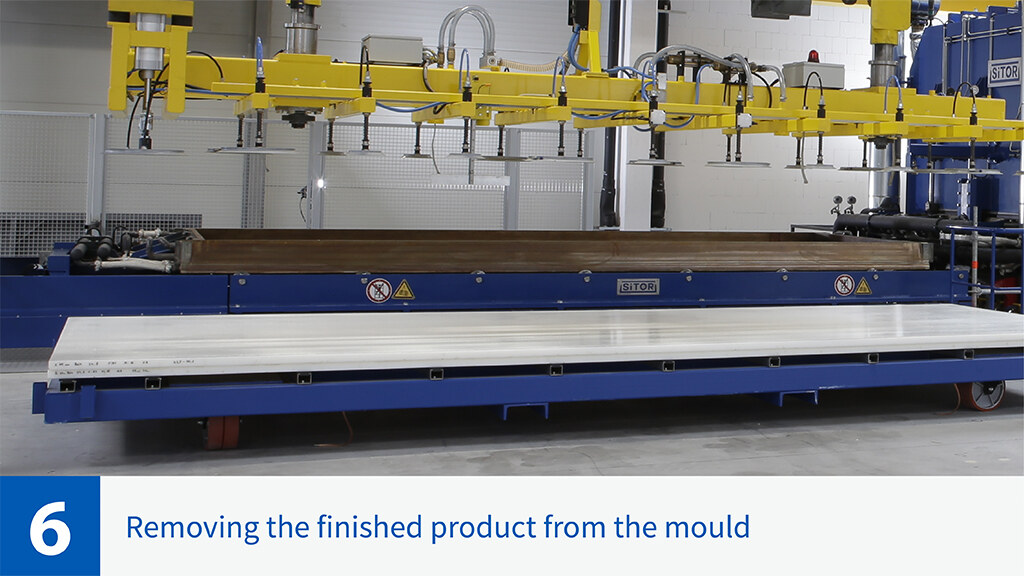
The mould is transported to the press, which is then closed with hydraulic cylinders. The production cycle, which is controlled by the industrial control unit, is defined in the compression programme, which represents a combination of different pressure and temperature values. After the completion of the pressing programme, the press is opened with the help of opening cylinders. The mould is transported from the press, and the finished product can be extracted from the mould with the help of a vacuum device. Finished products can be used as end products or as semi-finished products that are subject to further processing.
PRECISION IN MANUFACTURING
Products manufactured in the press
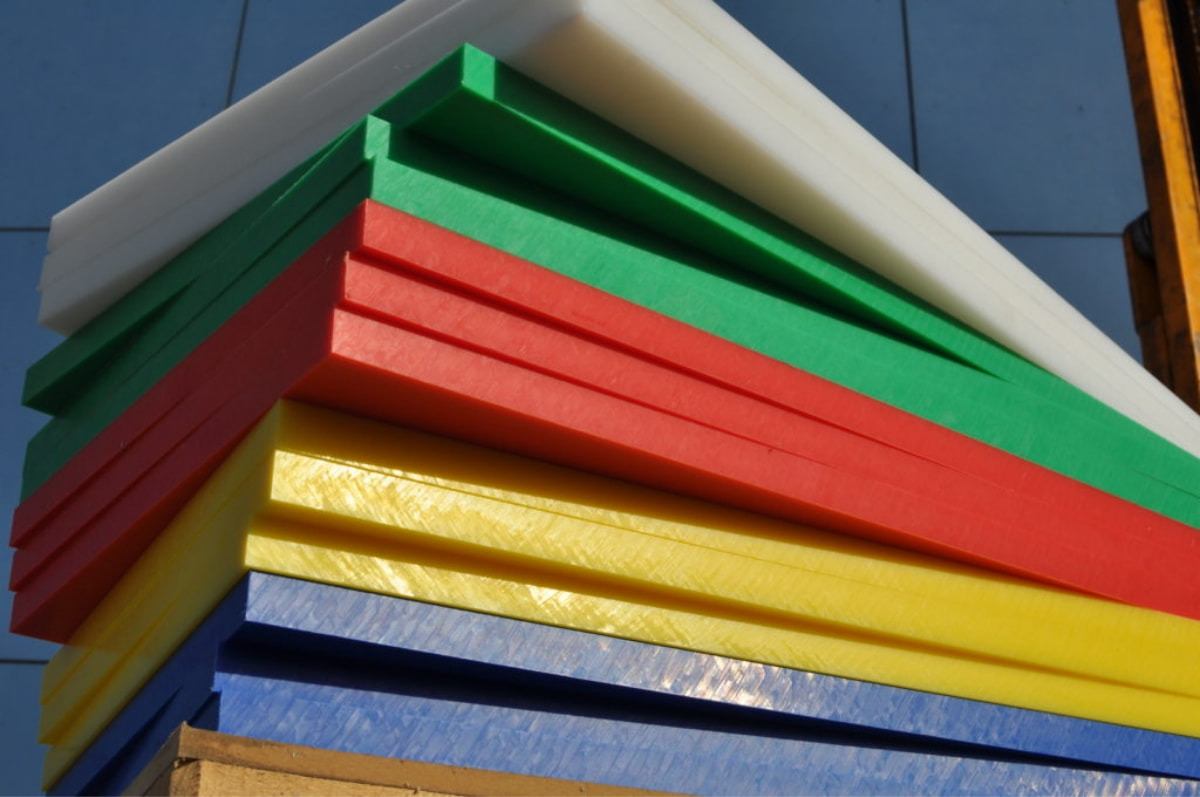
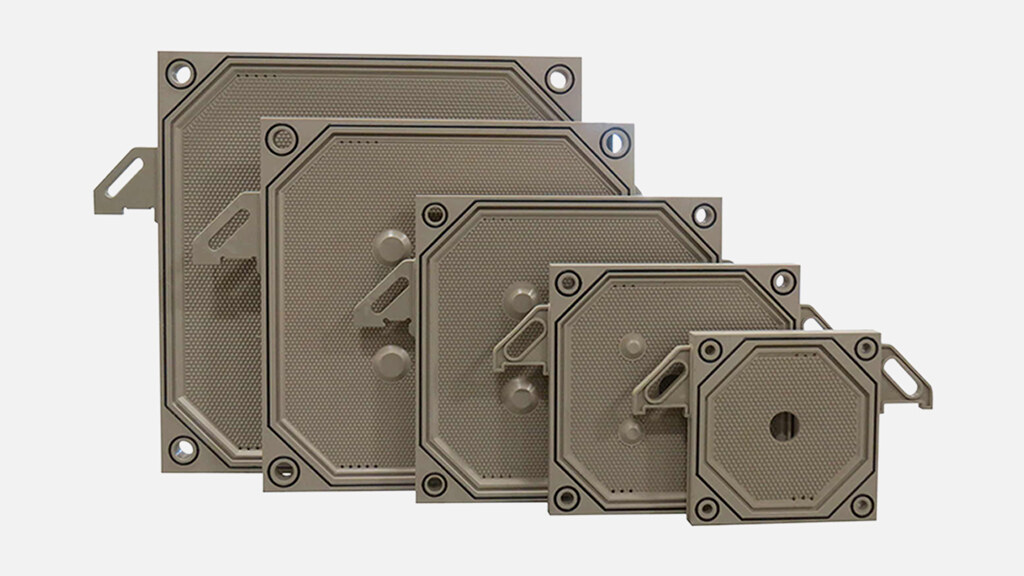
The main products of the press are plates made of thermoplastic materials PE, HDPE, UHMWPE and PP.
In addition to excellent mechanical properties, the plates produced in the press also have a homogeneous structure with a well-defined and stable form, making them highly suitable for machining into finished products.
The advantage of these presses is the ability to produce plates in larger dimensions and thicknesses.
A wide range of materials with specific physio-chemical properties enables intended use even in extreme conditions.
WIDE RANGE OF
Applications of sheets and finished products
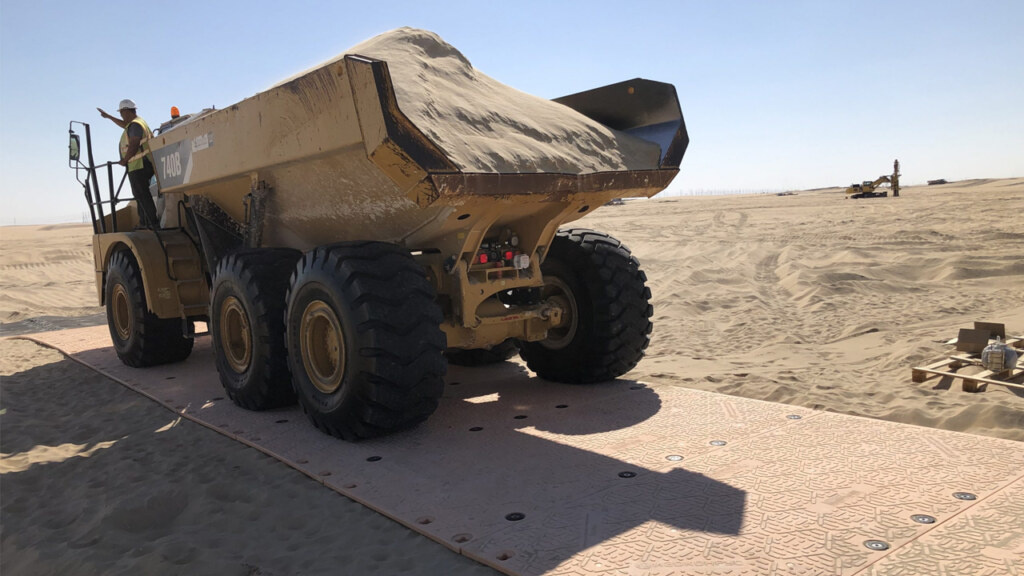
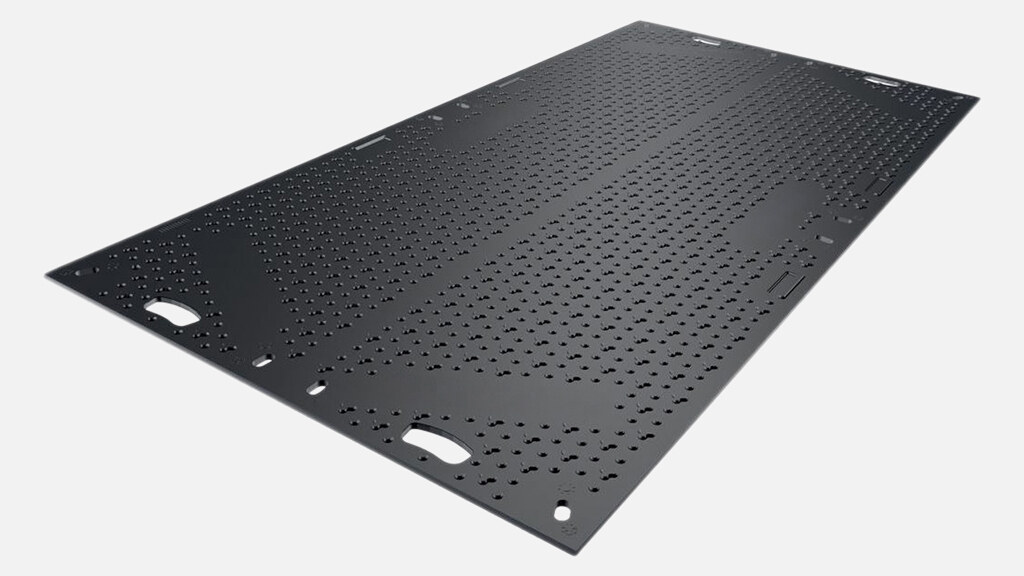
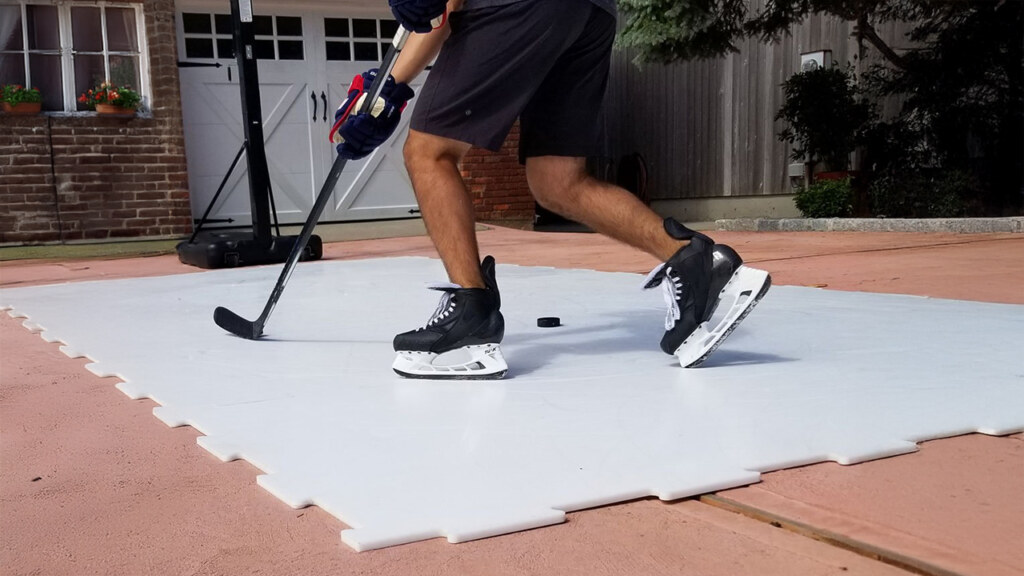
Temporary roads and parking platforms
Machinery construction (guides, gears, dosing augers, bearing bushings…)
Transport and storage of bulk materials (linings of wagons, trucks, silos…)
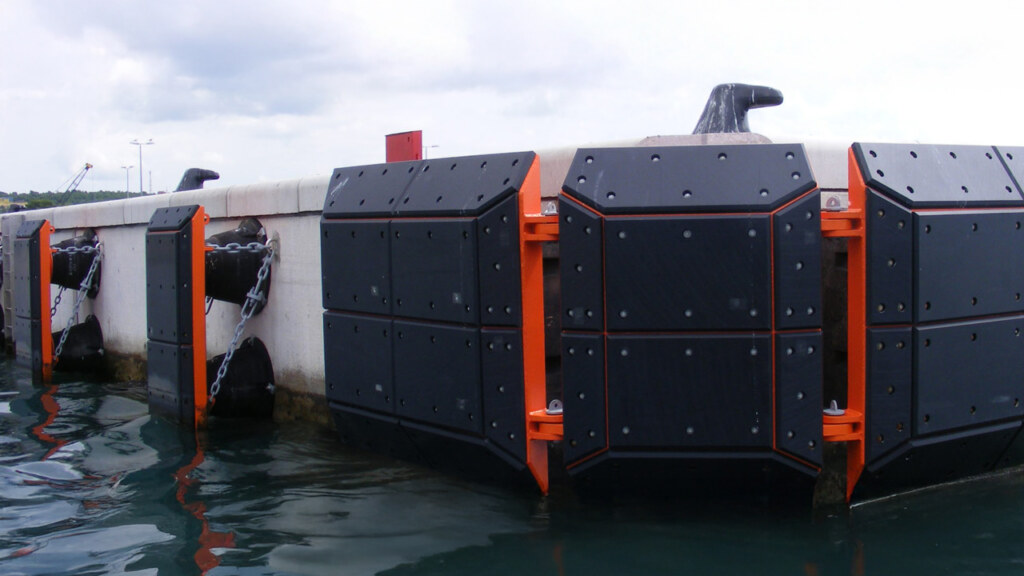
Shipbuilding (decks of ships and ferries, protective walls…)
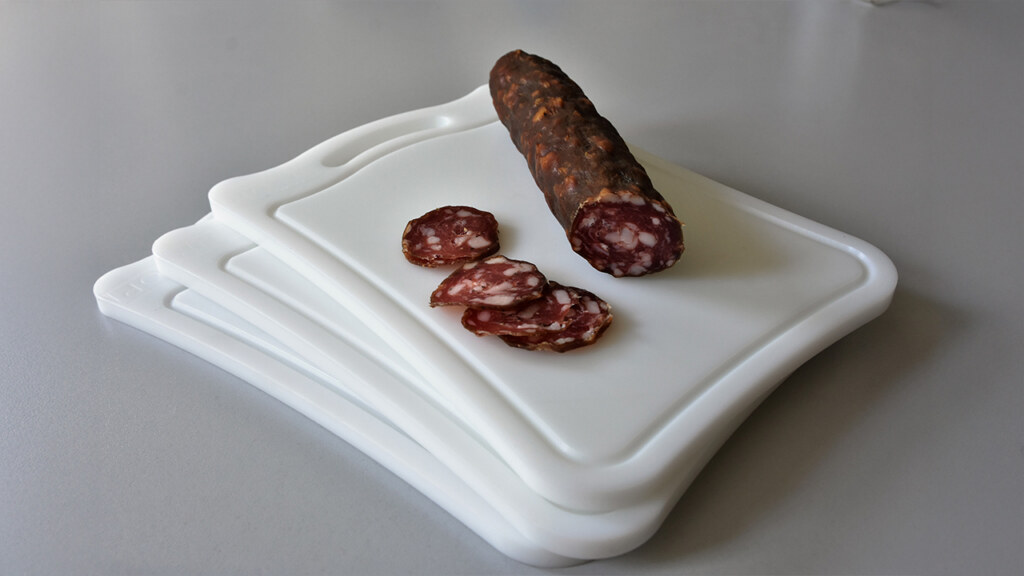
Food industry (worktops, countertops, containers, pantries, cold stores…)
Our team is here to help you achieve your goals. For inquiries, quotes, or collaboration, feel free to reach out to us. We'll gladly listen and work together to shape the path to success.